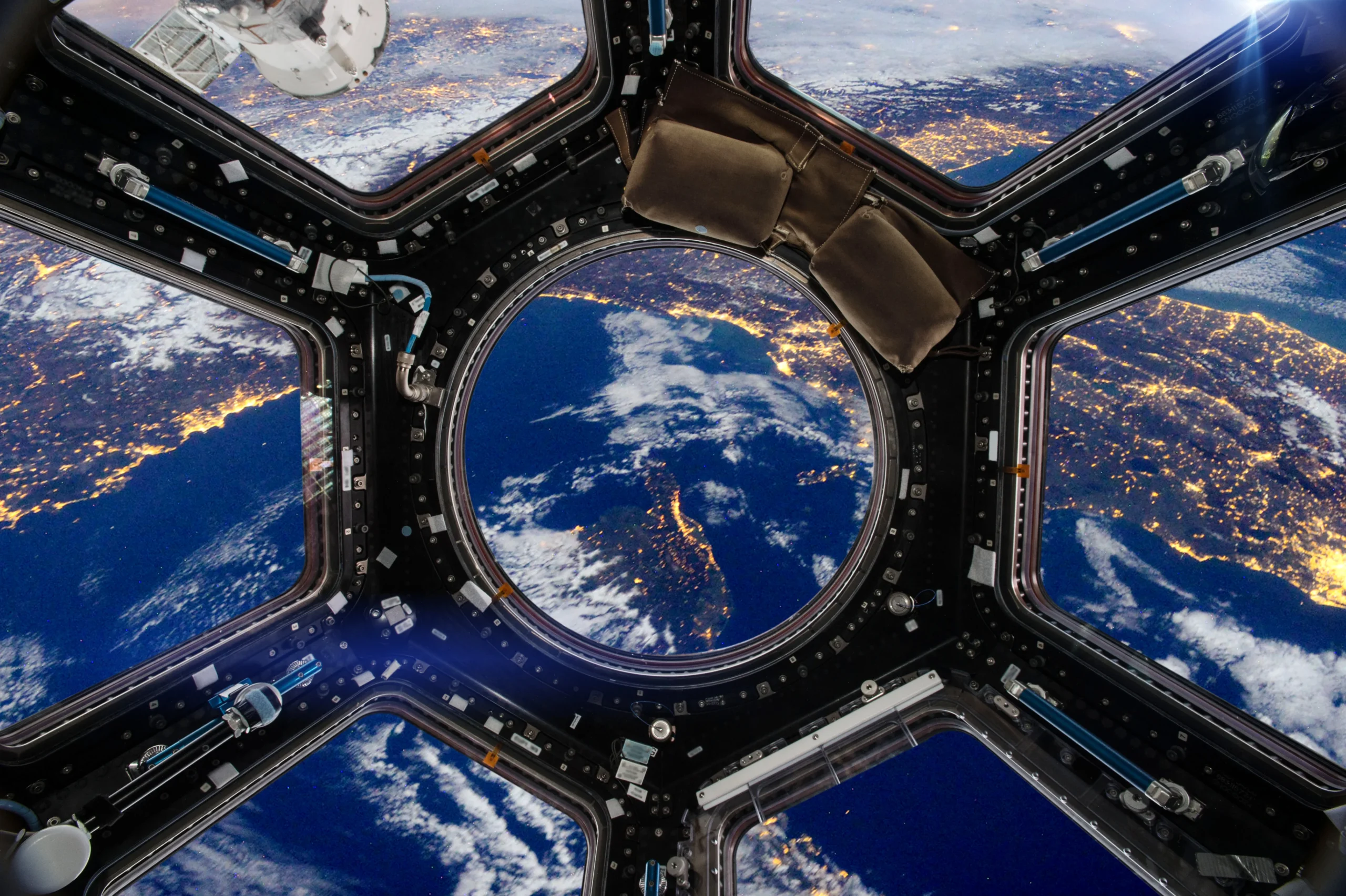

Space medicine is often seen as futuristic, distant, and only reserved for astronauts and billion-pound missions.
But that’s a mistake! Because the reality is this: space medicine is already shaping how we deliver healthcare on Earth.
From remote diagnostics to managing patients in extreme, resource-limited environments, the lessons learned in orbit are increasingly relevant to clinicians, expedition leaders, and healthcare systems worldwide.
As human spaceflight accelerates, so does the need to understand how medicine works when gravity, resources, and evacuation are no longer guaranteed.
So… what Is Space Medicine?
Space medicine (also known as aerospace medicine) focuses on how the human body behaves in extreme environments beyond Earth, particularly in microgravity, isolation, and confined systems.
It sits at the intersection of:
- Extreme physiology
- Remote and austere healthcare
- Human performance under pressure
In practical terms, it asks questions like:
- What happens when a patient can’t be evacuated?
- How do you treat illness with limited equipment?
- How does the body adapt when gravity disappears?
These are not hypothetical scenarios at all, they are active challenges faced daily aboard the International Space Station.
Medicine Without Backup: The Ultimate Remote Healthcare Scenario
If there’s one thing that defines space medicine, it’s this:
There is no safety net when a medical emergency happens, no hospital, no ambulance, and absolutely no rapid evacuation.
As highlighted in real mission discussions, even highly trained astronauts must operate under strict constraints where:
- Medical kits are limited
- Every item must serve multiple purposes
- Decision-making is critical under uncertainty
In many cases, the approach mirrors expedition and wilderness medicine on Earth, where clinicians must:
- Improvise with minimal resources
- Treat before diagnosis is fully confirmed
- Manage risk rather than eliminate it
That overlap is exactly why space medicine is becoming so relevant to modern healthcare.
What Happens to the Human Body in Space?
Not just “Earth without gravity”, space is a completely different physiological environment.
Microgravity Changes Everything
Even though gravity still exists in orbit, the body experiences microgravity, leading to major shifts:
- Fluid moves towards the head, causing “puffy face” and reduced leg volume
- Blood volume drops by up to 15%
- The heart works less, altering cardiovascular function
These changes may sound niche, but they directly inform how we understand:
- Bed rest physiology
- Cardiovascular de-conditioning
- Orthostatic intolerance in patients
Muscle and Bone Loss Happens Fast
In microgravity:
- Muscle mass can decline within days
- Bone density can drop by 1-2% per month
To counter this, astronauts train daily, sometimes for hours.
Sound familiar?
These findings are now applied to:
- Rehabilitation medicine
- Age-related osteoporosis
- Long-term immobilisation in ICU patients
The Brain and Mental Load
More than just physically demanding, Space is very much cognitively intense.
Astronauts operate in:
- High-pressure environments
- Constant workload
- Isolation and confinement
As one astronaut described, managing stress isn’t optional:
“You have to take it seriously, but also take care of yourself… without rest, you’re useless the next day”
That balance between performance and wellbeing is directly relevant to:
- Emergency medicine
- Humanitarian response
- High-stakes clinical environments
The Overlooked Link: Space Medicine and Earth-Based Healthcare
So, here’s where it gets interesting.
The constraints of space medicine mirror some of the most challenging environments on Earth:
| Space Scenario | Earth Equivalent |
| No evacuation | Remote expeditions, offshore work |
| Limited equipment | Disaster zones, field hospitals |
| Isolation | Polar expeditions, submarines |
| Delayed communication | Rural or low-resource settings |
In both cases, clinicians must:
- Make decisions with incomplete information
- Prioritise interventions
- Work across disciplines
This is why space medicine is increasingly relevant beyond aerospace.
Innovation Driven by Constraint
Space doesn’t allow inefficiency, everything must be:
- Lightweight
- Multi-functional
- Reliable
This drives innovation in areas like:
- Remote monitoring
- Compact medical kits
- Telemedicine systems
Even something as simple as packing medical equipment becomes strategic:
“You only bring what you can’t replace. Everything else, you improvise.”
That mindset is now influencing:
- Pre-hospital care
- Military medicine
- Expedition healthcare systems
The Future: From Orbit to Mars (…and Back to Earth)
As missions extend beyond low Earth orbit, the challenges increase:
- Longer duration missions (months to years)
- Increased radiation exposure
- Greater psychological strain
- No possibility of evacuation
These challenges are forcing advances in:
- Preventative medicine
- Autonomous care systems
- Human performance optimisation
And crucially, everything learned feeds back into Earth-based healthcare systems.
Okay… So, Why Learn Space Medicine Now?
Because this isn’t just about astronauts anymore, space medicine is becoming essential knowledge for:
- Healthcare professionals working in remote environments
- Those interested in human performance
- Anyone involved in expedition or extreme medicine
- Clinicians looking to understand healthcare under constraint
It challenges conventional thinking.
It removes safety nets.
And it forces a deeper understanding of what actually matters when delivering care.
Explore the Next Frontier in Medicine
The World Extreme Medicine Space Medicine Course brings these concepts together in a practical, real-world learning environment.
Held at Muncaster Castle from 1st – 4th June 2026, the course explores:
- Human physiology in space
- Managing medical events without evacuation
- Psychological and operational challenges
- Translating space medicine principles back to Earth
You’ll learn directly from astronauts, clinicians, and experts working at the forefront of human spaceflight.
Because the future of medicine isn’t just about where we can go, it’s about how we care for people when things don’t go to plan.
→ Join us in Muncaster Castle for Space Medicine 2026
→ Sign up to our mailing list to learn more about extreme medicine.