Most space films get the visuals right, but very few get the human right.
With the release of Project Hail Mary, adapted from the bestselling novel by Andy Weir, there’s been a lot of conversation around the science, the spacecraft, and the scale, and rightly so. The story has always been grounded in scientific realism.
But what makes it stand out is something else entirely, it captures what happens when everything familiar is stripped away and it’s just you, your training, and your ability to think clearly under pressure.
Space Medicine Is About People, Not Just Space
We tend to think of space as the ultimate extreme environment.
But the real challenge isn’t just the environment itself. It’s how the human body and mind respond to it.
In Project Hail Mary, Ryland Grace isn’t a perfect hero…
He hesitates, he adapts, and he relies on logic because it’s the only tool he has left.
And that’s what makes it feel real.
Because in space, there’s no immediate evacuation.
No nearby hospital.
No safety net waiting in the background.
You are the system, and that’s the foundation of space medicine.
The Detail That Makes It Real
One of the reasons the film resonates so strongly is because it’s grounded in real-world experience.
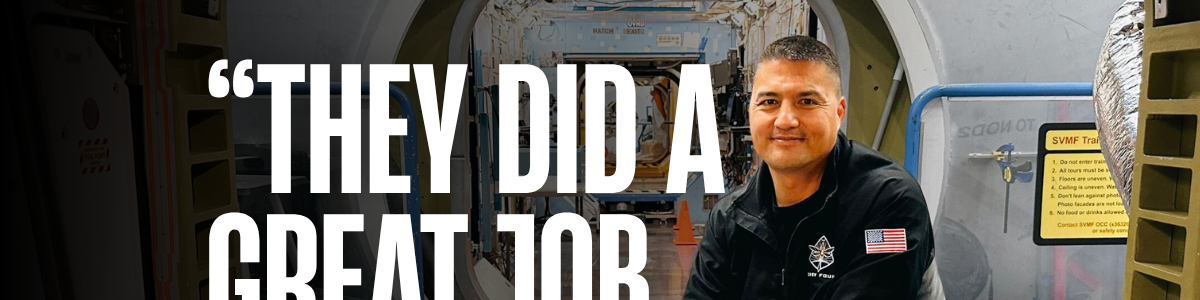
Kjell Lindgren, a NASA astronaut, physician and WEM faculty who has spent over 300 days in space, contributed to the film’s authenticity.
His verdict?
“I think it’s phenomenal. If you listen when he’s in the space suit for the first few times, the high pitched fan noise is the sound from the interior of space station that I recorded. And then just generally the chaos of moving around in zero-g the first time. They did a great job.”
That level of detail matters because space medicine isn’t theoretical, it’s shaped by real experiences in environments where:
- The nearest hospital is hundreds of miles below you
- Communication delays can impact critical decisions
- The body behaves differently in microgravity
- Isolation changes how people think, react, and perform
So… What Is Space Medicine?
At its core, space medicine focuses on how to care for humans in environments where traditional healthcare systems don’t exist.
That includes understanding:
- How the body adapts to microgravity
- How to manage medical emergencies without evacuation
- The psychological impact of isolation and confinement
- How teams function under prolonged stress
- What happens when plans fail and decisions still need to be made
These challenges aren’t hypothetical at all, in truth they’re faced every day by astronauts aboard missions like those on the International Space Station, and they’re becoming even more important as space travel expands.
And Why Does Space Medicine Matter on Earth?
The principles behind space medicine don’t stay in orbit, they apply directly to some of the most demanding environments here on Earth.
- Expedition medicine.
- Humanitarian response.
- Remote and rural healthcare.
- Disaster zones.
In all of these settings, the same questions come up:
What do you do when help is far away?
How do you make decisions with limited information?
How do you adapt when conditions change unexpectedly?
And space medicine provides a framework for answering those questions.
From Film to Reality: Learning Space Medicine
If Project Hail Mary has sparked your interest, there’s a way to explore the reality behind it.
The World Extreme Medicine Space Medicine course brings these concepts into a practical, real-world setting.
Hosted at Muncaster Castle, Cumbria from 1st – 4th June 2026, the course is shaped by the experience of those who have lived and worked in space, including space faculty such as Mike Barratt, alongside a wider network of experts in the field.
Across the course, you’ll explore how medicine works when evacuation isn’t an option, how the body responds in extreme environments, and what space can teach us about healthcare on Earth.
You don’t need to be a medical professional to attend as it’s designed for anyone interested in human performance, extreme environments, and the future of medicine.
The Human Factor
There’s a quote often attributed to Roald Amundsen:
“Adventure is just bad planning.”
It’s a good line.. but it only tells part of the story, because when the plan stops working, and it will, what matters next isn’t the environment: it’s the human.
That’s what Project Hail Mary understands.
And it’s what space medicine is built on.
Explore the Space Medicine Course
If you’re curious about how medicine works at the edge of human capability, this is where that journey starts.
Find out more and secure your place by clicking here.
FAQs About Space Medicine
What is space medicine?
Space medicine focuses on how to care for humans in environments where traditional healthcare systems are not available, such as space missions or remote environments on Earth.
Who is a space medicine course for?
It’s suitable for medical professionals, students, and anyone interested in human performance, extreme environments, and decision-making under pressure.
Do you need to be a medical professional to study space medicine?
No. Many courses are designed to be accessible to a wide range of professionals and backgrounds.